



Can't Afford the USA? The Cheapest Universities for International Students in 2026
Complete guide to top 7 cheapest universities in USA covering tuition fees, scholarships, affordable states and admission process for international students.
 Ali Khan
If you have written off studying in America because of the fees, do not close the door yet. The USA has a reputation for sky-high tuition, but that reputation only tells half the story. If you are an international student on a budget, there are accredited American universities where tuition starts at roughly 7,500 US dollars a year, a fraction of the 40,000-plus charged by big-name schools. This 2026 guide lists the cheapest universities in the USA for international students, the most affordable states, the scholarships that cut costs further, and the F-1 basics that tie it all together. If you are exploring the destination first, start with our full study in USA guide.
What Counts as a Cheap US University for International Students?
"Cheap" is relative, so it helps to anchor it. On average, public universities charge international students about 15,000 to 25,000 US dollars a year in tuition, while private and highly ranked schools run from 40,000 to 60,000. In low-cost states, though, budget public universities can charge as little as 7,500 to 14,000 a year. The national picture makes the gap clear: a four-year public university averages roughly 25,700 dollars a year in total cost for in-state students and about 44,000 for out-of-state students. A well-chosen budget university can bring your all-in cost closer to the lower end of that range. Two things matter when you judge affordability: the tuition itself, and whether the university charges international or out-of-state students a premium. A handful of schools charge everyone the same flat rate, which is where the real bargains sit.
Cheapest Universities in the USA for International Students (2026)
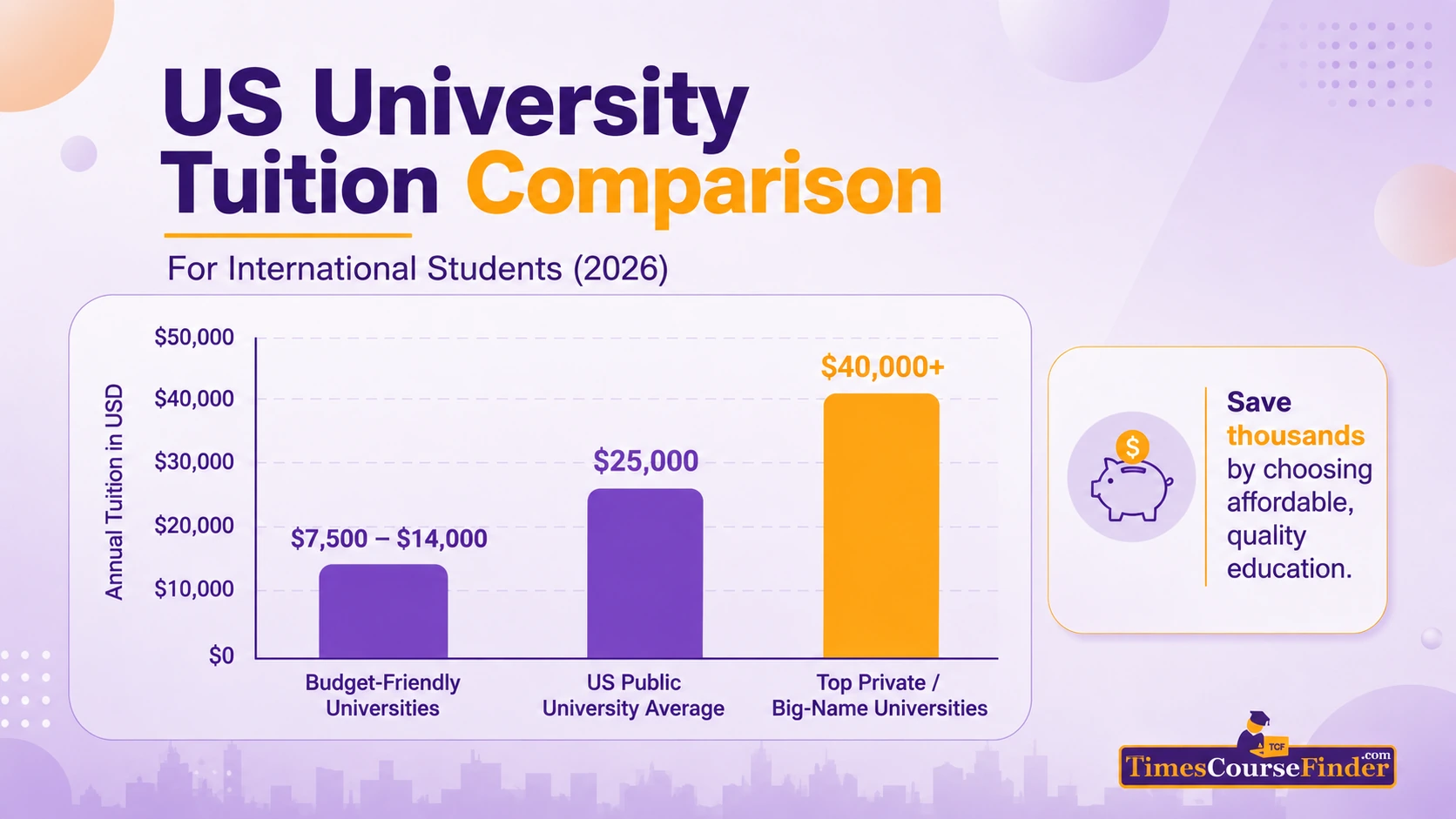
These accredited universities consistently appear among the most affordable for international students. Tuition is approximate for 2026 and excludes living costs, so always confirm the current figure and the international rate on the university official page before you apply.
|
University |
State |
Approx. tuition/year |
Why it stands out |
|---|---|---|---|
|
Mississippi Valley State University |
Mississippi |
~$7,500 |
One of the lowest verified public sticker prices in the country |
|
Mississippi University for Women |
Mississippi |
~$8,900 |
Charges the same flat rate to in-state and out-of-state students |
|
Minot State University |
North Dakota |
~$9,200 |
Out-of-state and international students pay the low in-state rate; ranked among the top public schools by US News 2026 |
|
Delta State University |
Mississippi |
~$9,000 |
Small, affordable public university with a low cost of living nearby |
|
University of the People |
Online |
Tuition-free* |
Accredited online model; you pay only modest assessment fees |
|
Brigham Young University |
Utah |
~$13,400 |
Unusually low tuition for a well-regarded university |
|
University of Louisiana at Monroe |
Louisiana |
~$14,000 |
Low undergraduate tuition with a friendly acceptance rate |
*University of the People charges application and per-course assessment fees rather than tuition, so a full degree still costs money, just far less than a campus programme. For campus study, Mississippi Valley State, Mississippi University for Women, and Minot State are the strongest pure-price picks, and Minot State is especially notable because international students are not charged the usual out-of-state premium.
Affordable Public Universities Worth a Look
If you want a larger, higher-ranked university and can stretch the budget a little, several well-known public universities are still far cheaper than the private big names, and you can explore each one on TCF: Florida State University and the University of Texas at Dallas both sit near 21,000 dollars a year, while the University of Florida (around 28,000) and Purdue University (around 32,000) offer strong rankings and graduate outcomes for the money. These are not the rock-bottom cheapest, but they balance cost, reputation, and employability well.
Cheapest US States for International Students
Where you study changes your total spend as much as which university you pick, because rent and daily costs vary widely across the country. The Midwest and the South are consistently the most affordable, and the same states tend to host the budget universities above.
|
State |
Cost-of-living index |
Approx. rent/month |
|---|---|---|
|
Mississippi |
83.3 |
$777 |
|
Kansas |
86.5 |
$862 |
|
Alabama |
87.9 |
$807 |
|
Oklahoma |
87.9 |
$814 |
|
Missouri |
88.0 |
$914 |
A budget university in a low-cost state is the winning combination: you save on both tuition and living, which is exactly what keeps your F-1 financial proof manageable.
Beyond Tuition: The Real Cost of Studying in the USA
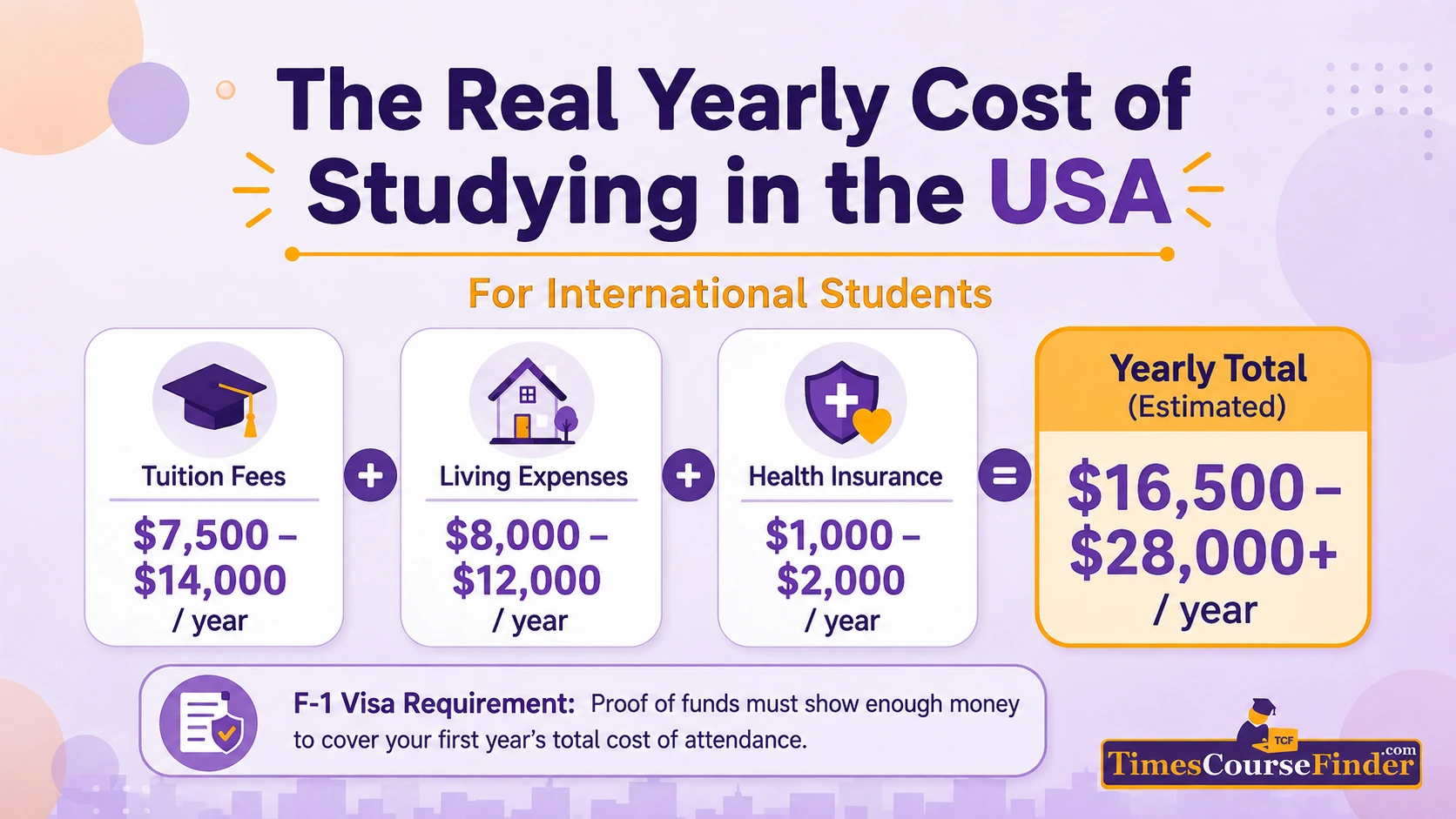
Tuition is only part of the picture. Your true annual cost is tuition plus living expenses (roughly 10,000 to 14,000 US dollars a year in a low-cost state), mandatory health insurance, and one-off costs such as the SEVIS fee and visa application. This total matters for more than budgeting: your I-20 and F-1 visa financial proof are based on one year of tuition plus living costs, so a cheaper university means a smaller amount to show in the bank and simpler financial evidence at the visa stage. There is an upside on the earning side too. On an F-1 visa you can usually work on campus up to 20 hours a week during term, and after graduation you can apply for Optional Practical Training (OPT) for 12 months, extended by a further 24 months if your degree is in a STEM field. A budget STEM degree can therefore still lead to up to three years of US work experience, which is where the real return on a low-cost degree shows up.
Scholarships and Assistantships That Cut Costs Further
Even at an affordable university, funding can push your costs lower. Most US universities offer merit-based scholarships, need-based aid, departmental awards, and, at postgraduate level, teaching or research assistantships that waive tuition and pay a stipend. Apply early, because scholarship deadlines usually close before admission decisions. Browse current US awards on the USA scholarships listing, and check each university financial-aid page for international-specific funding, which is easy to miss.
How to Apply to a Cheap US University from Pakistan
The process is straightforward once you plan around the deadlines:
- Shortlist by total cost, not just tuition. Compare tuition, living costs, and the international rate side by side.
- Prepare your documents: transcripts, an English test score (IELTS, PTE, or TOEFL), a strong statement of purpose, and references.
- Apply for scholarships at the same time as admission, since aid deadlines come first.
- Once admitted, the university issues your I-20; then pay the SEVIS fee and apply for the F-1 visa with your financial proof.
You can line up options quickly by browsing US universities and US courses on TCF, then narrowing by budget.
Conclusion
Studying in the USA does not have to mean crippling debt. With tuition from about 7,500 dollars a year at accredited public universities, a low-cost state, and a scholarship or assistantship on top, a US degree is within reach for international students on a real budget, and the OPT and STEM work rights make it pay off afterwards. Compare your options on TCF, then book a free counselling session to build a shortlist that fits your budget and your goals.
Simplified Step By Step
Fill in for a call-back within 24 hours
Student Reviews
Based on 0 approved reviews
No reviews yet — be the first!